Full Report
A launch on World Drowning Prevention Day
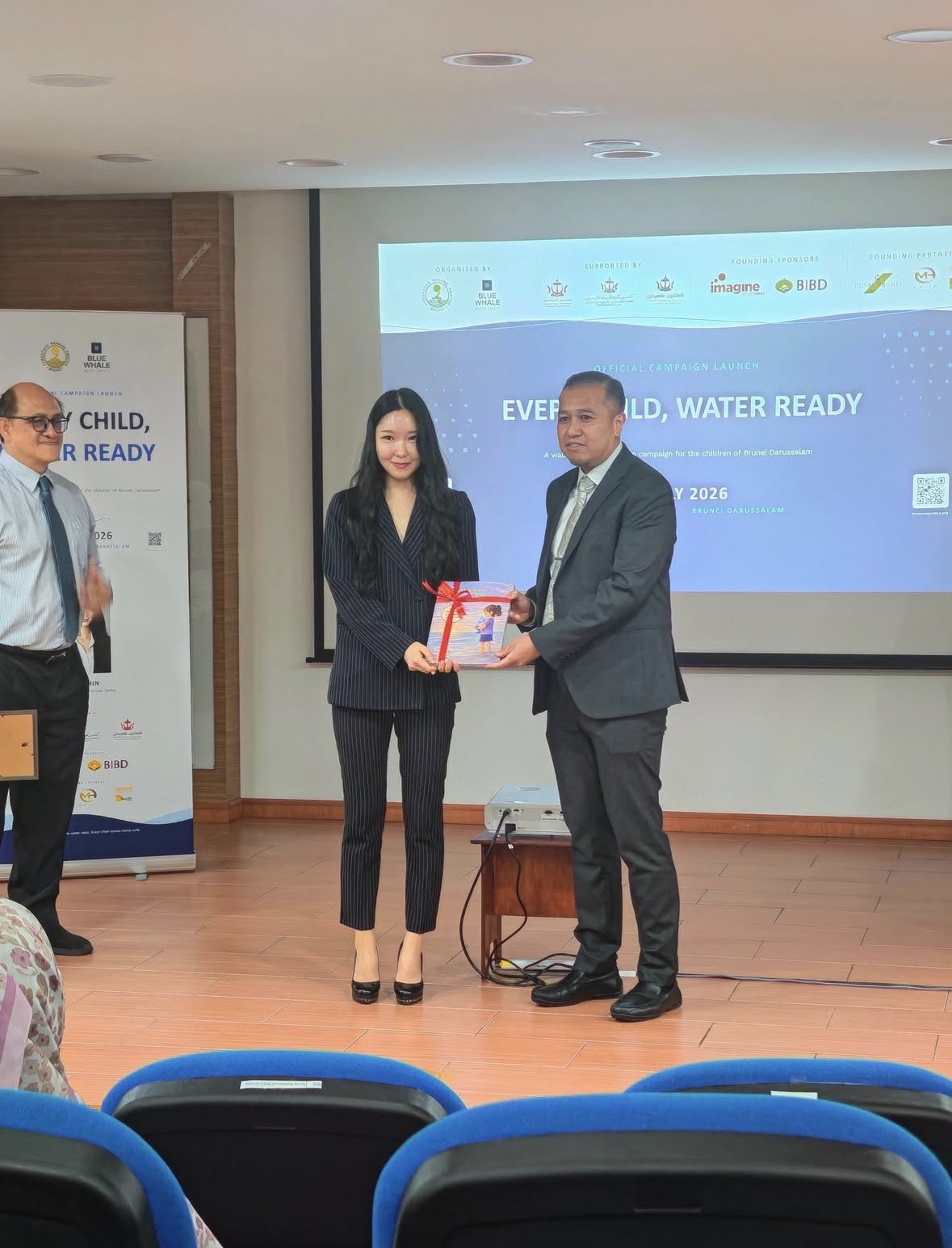
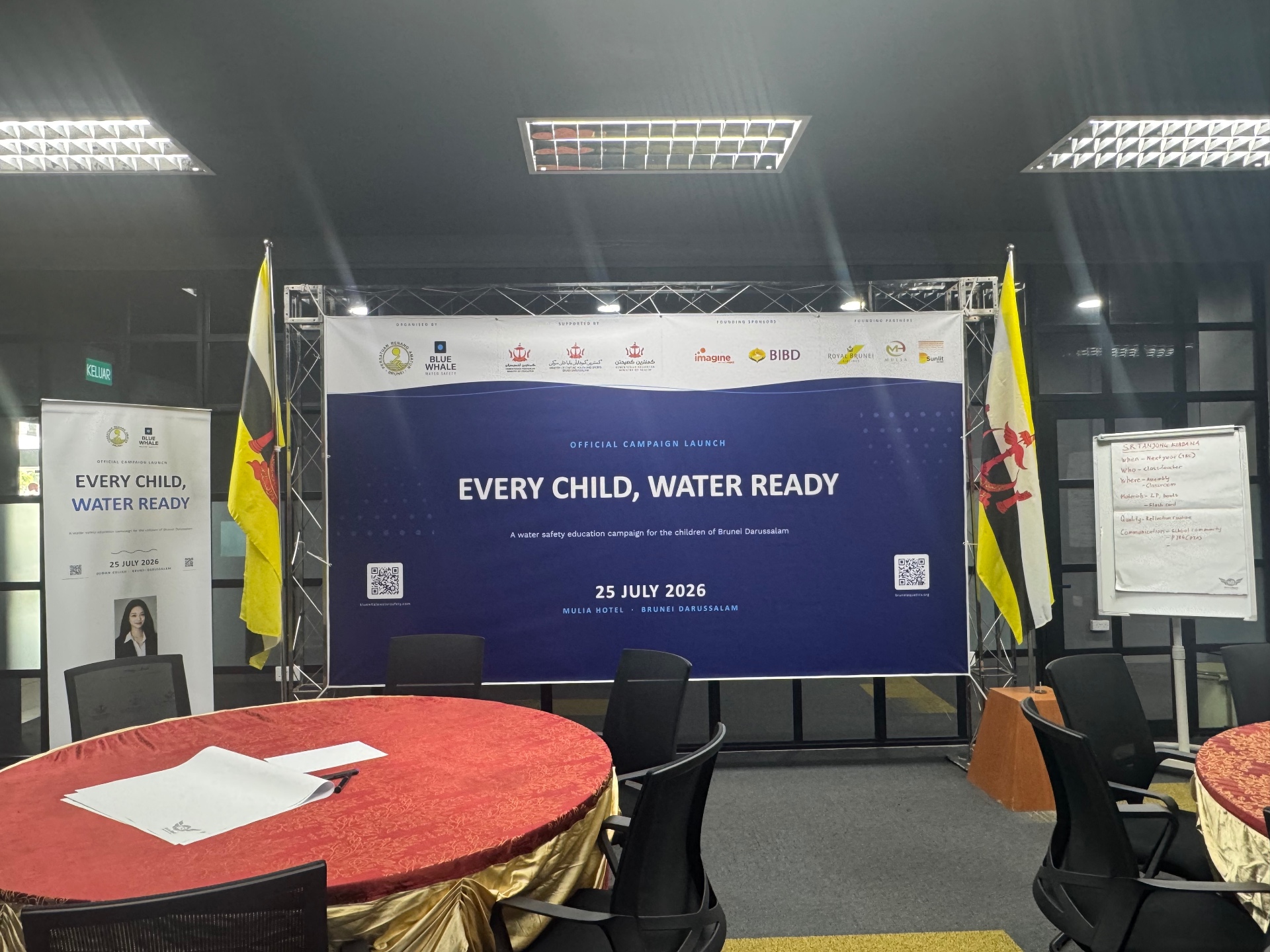
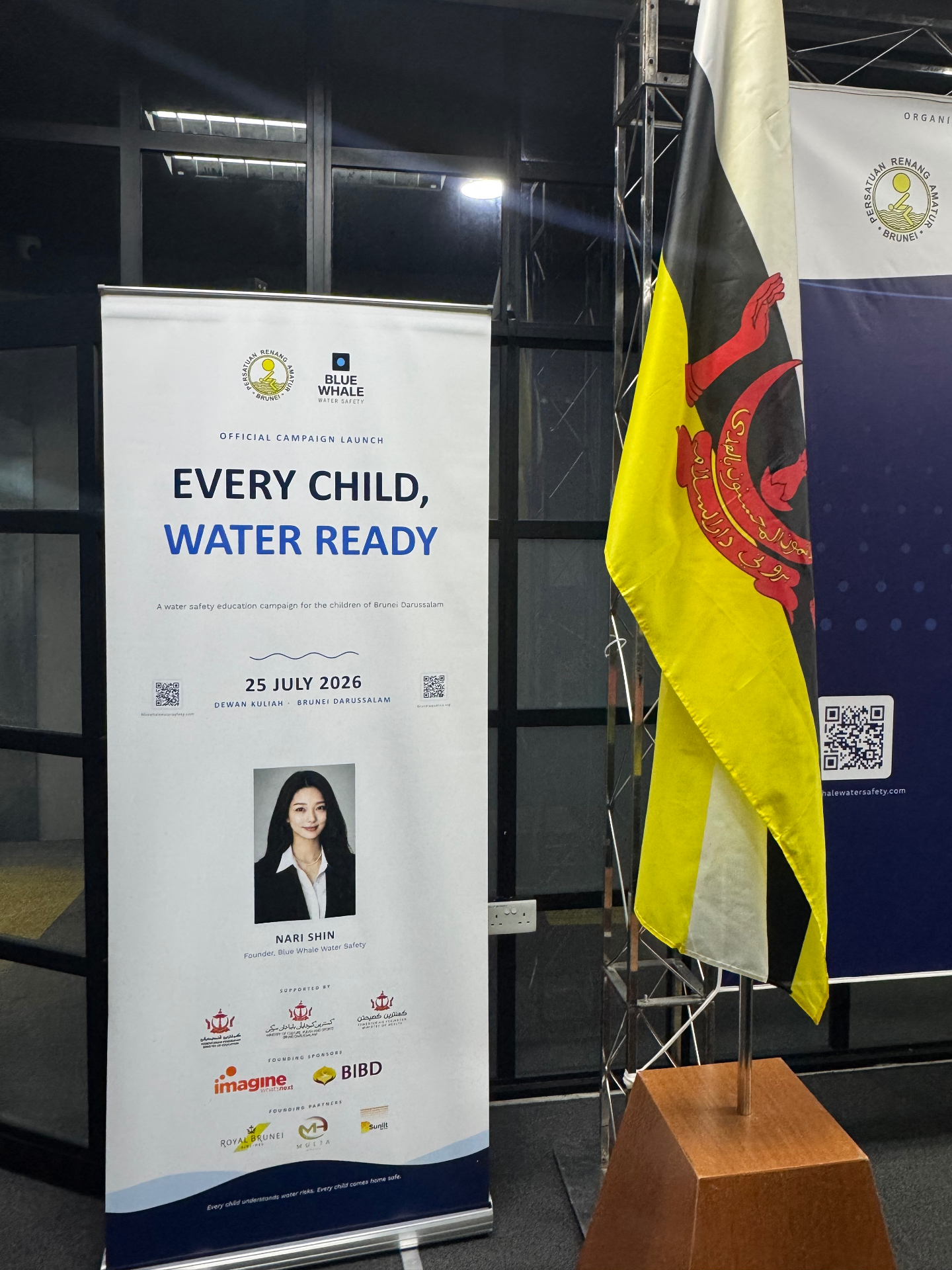
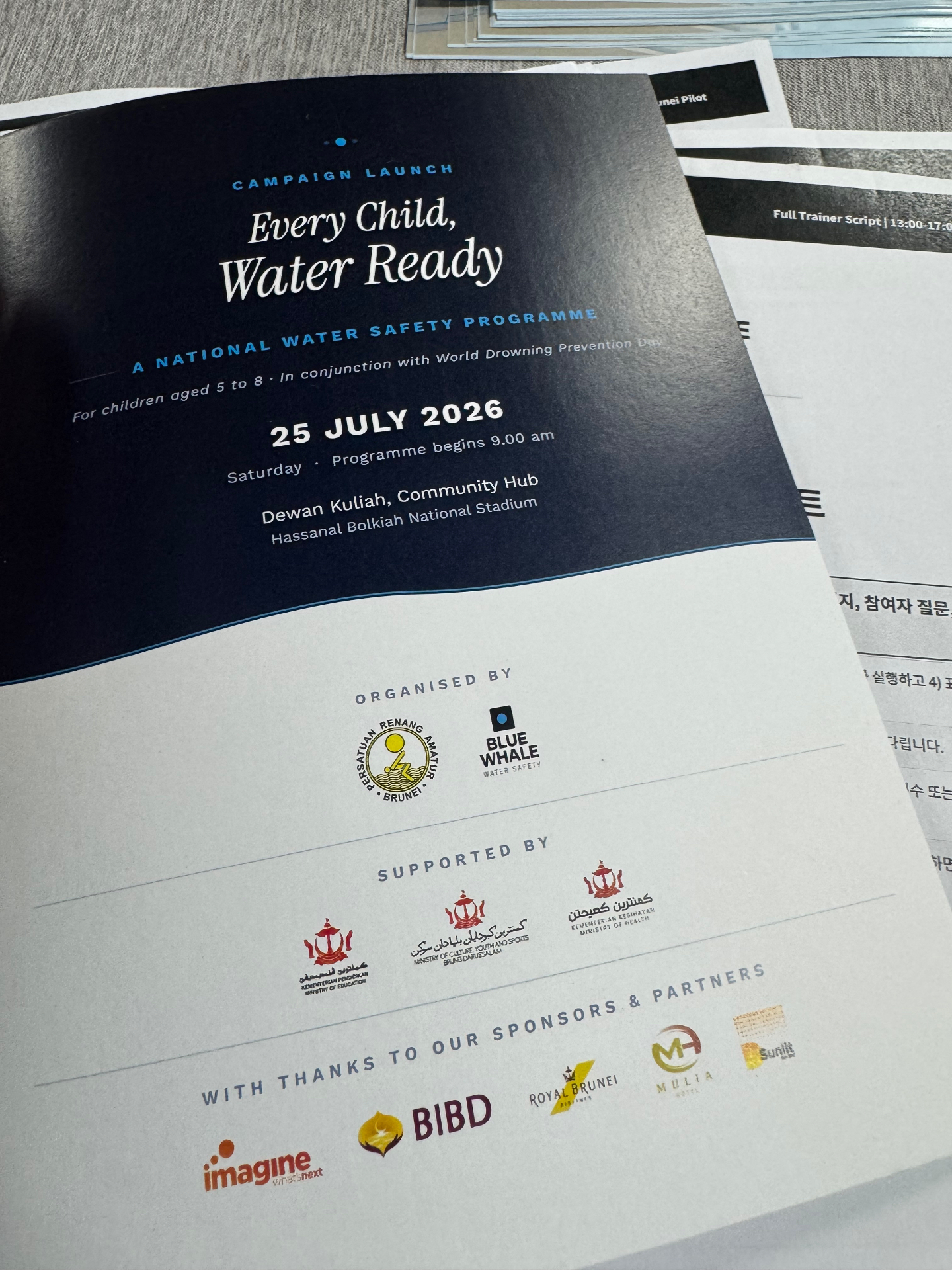
Blue Whale Water Safety was introduced in Brunei Darussalam on 25 July 2026, in conjunction with World Drowning Prevention Day. The programme launch was held at the Community Hub, Hassanal Bolkiah National Stadium, and brought together educators alongside representatives from the education, health, youth, sports and community sectors.
World Drowning Prevention Day was established by the United Nations to draw attention to drowning as a preventable cause of death and to encourage countries to adopt practical prevention measures. Holding the launch on this date placed the programme within that wider prevention agenda rather than treating it as a standalone activity.
The event combined a public campaign launch with professional development for participating teachers, so that the introduction of the programme and the preparation of the educators who would deliver it happened together.
Why Blue Whale Water Safety was developed
Most early drowning prevention work depends on access to water: pools, instructors, transport and time. Many children do not have that access, and many begin swimming lessons well after the age at which they first encounter water unsupervised.
Blue Whale Water Safety was developed to address the period before swimming instruction begins. It focuses on what a child understands and decides, rather than on what a child can physically do in water. The material is written for ages 3 to 8, when routines, language and habits around risk are still forming.
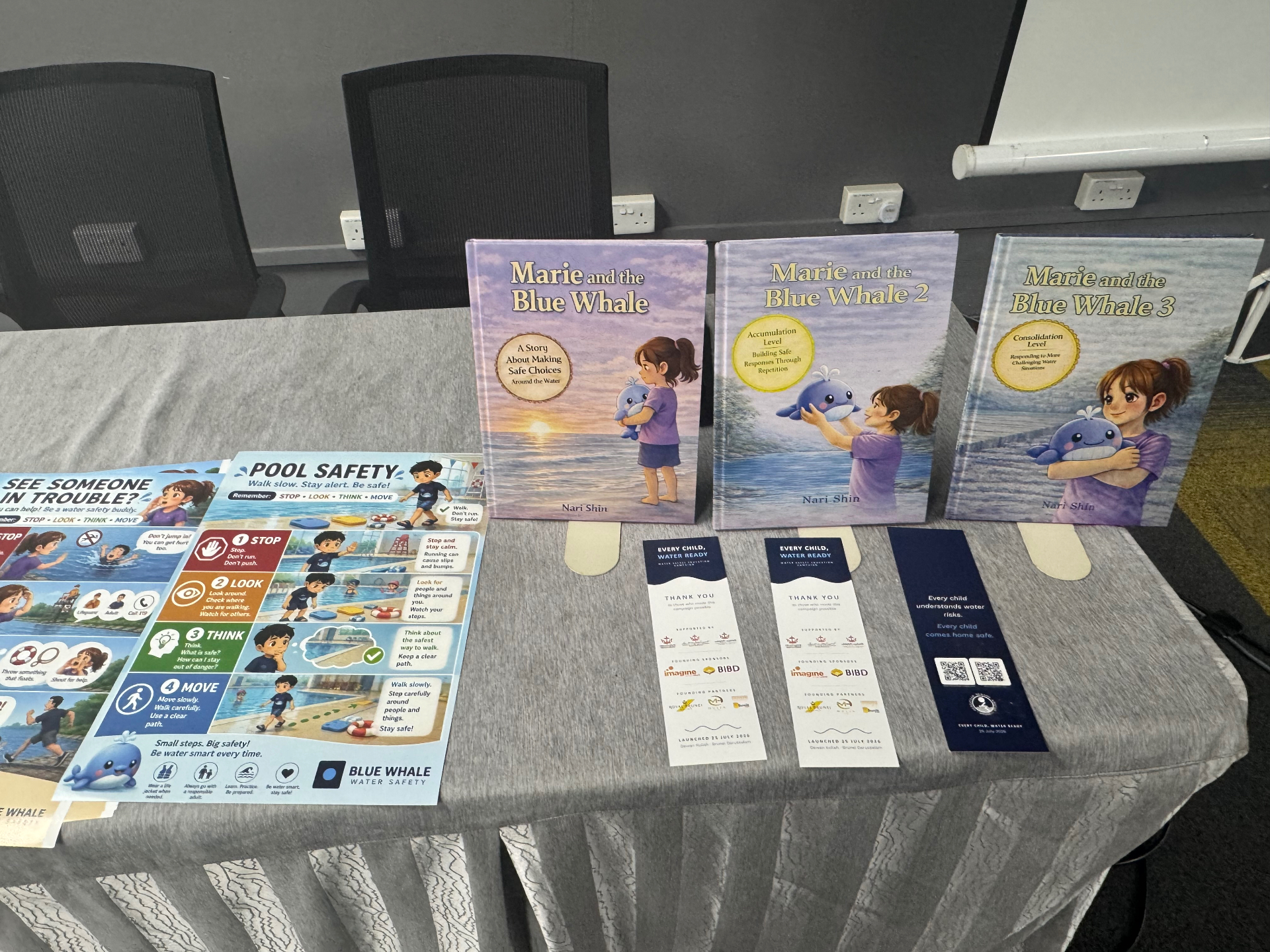
The programme uses a narrative sequence built around a central character, Marie, and a blue whale. Repeated reading, shared vocabulary and simple decision prompts are used so that safety behaviour becomes familiar rather than exceptional.
Classroom-based drowning prevention
The programme is designed to run inside existing school routines. Sessions use reading time, discussion and classroom display rather than pool access, which allows schools to deliver water safety education without additional facilities.
The three-level structure moves from first exposure through reinforcement to consolidation. Each level uses the same core language, so a child meets consistent instructions across a full school year instead of a single one-off talk.
Teacher Professional Development
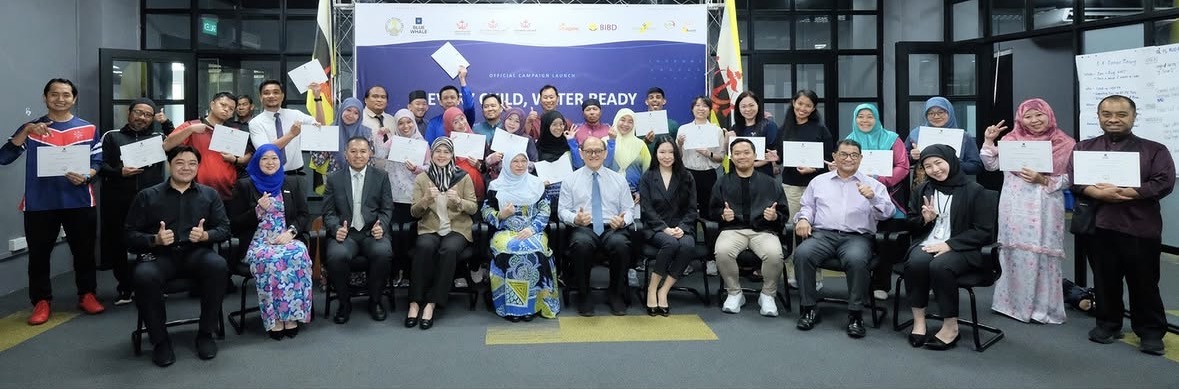
Educators from 13 schools took part in a two-day professional development programme held alongside the launch.
The training covered the structure of the three-level reading sequence, the discussion prompts used in each session, and the shared safety language that runs across the materials. Teachers worked through how a session fits into an ordinary class period and how the same vocabulary is reinforced between levels.
The focus throughout was cognitive water safety education for children aged 3 to 8: recognising risk, knowing what to do before entering water, and understanding when to ask an adult. Participating educators completed the programme with certificates and the classroom resources needed to run sessions in their own schools.
Government Support & Planned Education Rollout
The Ministry of Education (MoE) officially endorsed the initiative. The Ministry of Education will coordinate the programme rollout through the Department of Schools, the Department of Co-Curriculum Education, and the Health, Safety and Environment Section.
The Ministry of Health (MoH) officially confirmed its support for the initiative.
Representatives from the Ministry of Culture, Youth and Sports participated in the official launch.
Taken together, this involvement across education, health, and culture, youth and sports demonstrates cross-government collaboration in advancing drowning prevention education.
The initiative aligns with the World Health Organization's Preventing Drowning: An Implementation Guide (2017) and with United Nations Resolution A/RES/75/273 on global drowning prevention, both of which identify school-based education and community awareness as prevention measures.
International significance and next steps
The Brunei launch is the first national introduction of the programme through a ministry-coordinated pathway, and it establishes a working model for how the materials can be adopted elsewhere: endorsement, teacher preparation, and delivery inside existing school structures.
The campaign was organised with Persatuan Renang Amatur Brunei, whose involvement connected the classroom material to the local aquatic community.
Work following the launch focuses on classroom delivery in the participating schools, adaptation of the materials to local school structures and languages, and preparation for wider implementation. Further updates will be published as the rollout progresses.